culture
Street Art & Creative Spaces
The walls are talking
Timișoara has always been a city of firsts. First in Romania to have electric street lighting. First to rise against communism. And in recent years, first to embrace street art not as vandalism but as civic identity.
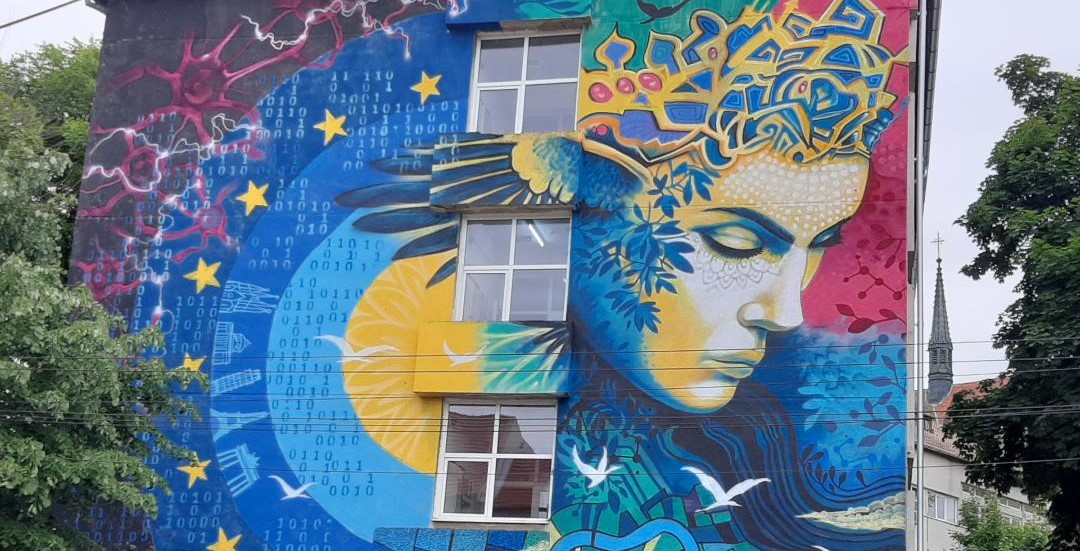
It started small — tags and stencils in the Fabric quarter, where crumbling walls offered both canvas and permission. Then came the festivals. International street art events brought muralists from across Europe, and suddenly entire building façades were being transformed. A five-story apartment block on Strada Ungureanu became a canvas for a photorealistic portrait. A blank wall near the Bega became an abstract explosion of color visible from the opposite bank. Each year adds new layers.
The Fabric quarter remains the epicenter. Walk its streets and you'll find art on every scale — from small stenciled figures at eye level to wall-spanning murals that change the character of an entire block. The contrast between the decaying Habsburg architecture and the vivid contemporary art creates something neither could achieve alone: a visual tension between past and present that makes every corner feel charged with meaning.
But the creative energy extends beyond the streets. The former Fructus factory — an industrial complex near the center — has been gradually colonized by artists, designers, and small creative businesses. It's not a polished "creative hub" with a branding strategy; it's a genuine, messy, evolving space where things are being made. Pop-up exhibitions appear without announcement. A printmaker works next to a furniture designer next to a photographer's studio.
The Timișoara National Art Museum runs a contemporary program that bridges the gap between institutional and street culture. Independent galleries — small, often apartment-based, changing their exhibitions monthly — dot the city center. The art school feeds talent into the scene continuously.
What you won't find in Timișoara is the self-conscious street art of cities that have turned murals into tourist products. Here, the art still feels urgent. It's on buildings that might be demolished next year. It's by artists who live in the neighborhood. It's about this place, right now.
What to See
- 1Fabric quarter murals — the highest concentration, especially along Str. Ungureanu and surrounding blocks
- 2The Fructus factory complex — artists' studios, pop-up exhibitions, creative workshops
- 3Large-scale murals near the Bega canal — visible from the cycling path
- 4Independent apartment galleries in the city center — ask at the tourist info for current exhibitions
- 5Annual street art additions — new pieces appear each year, making every visit different
Visitor Tips
- —The best street art is in Fabric — dedicate at least an hour to wandering the side streets
- —Murals change and are painted over — what you see today may not be there next year, so photograph freely
- —For Fructus and independent galleries, weekend afternoons are when you're most likely to find doors open
- —The tourist information center on Str. Alba Iulia sometimes has street art walking maps
- —Combine with the Fabric quarter walk — the street art and the architecture feed each other beautifully